PLA's Stealth GJ-21 Drones: Countering Uncrewed Swarm Attacks Near Taiwan
NewsHub
Apr 19, 2026
1 min read
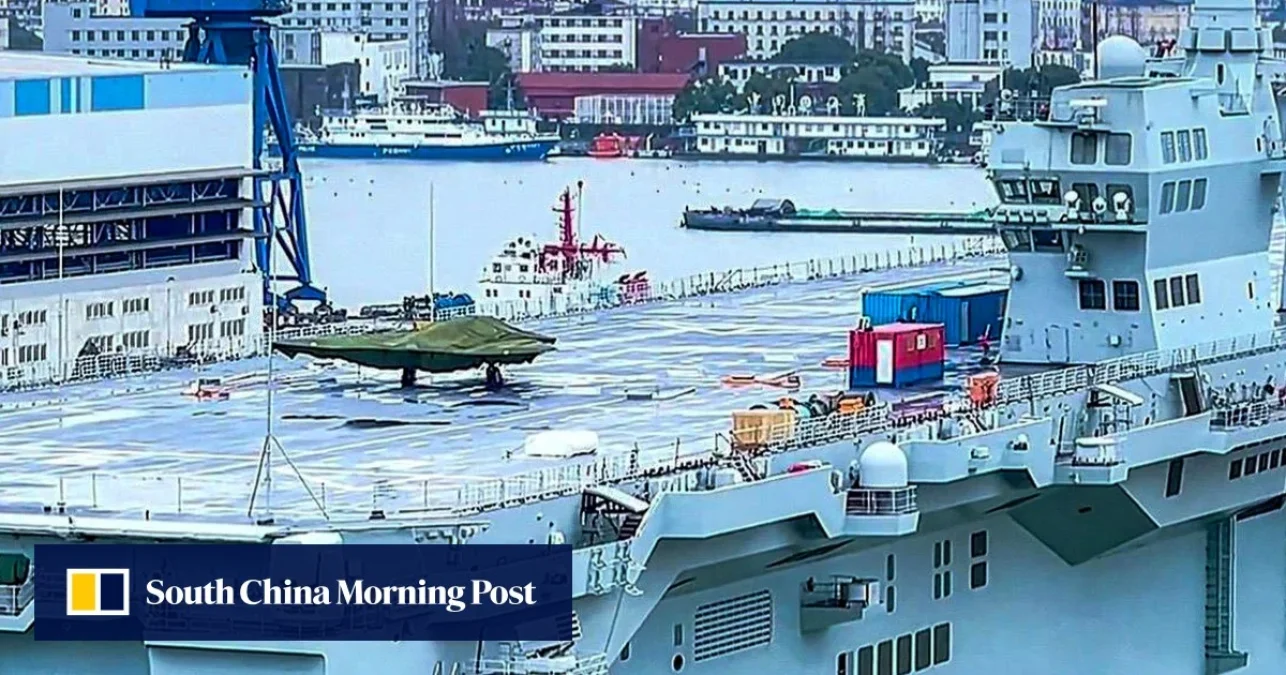
A recent analysis from a military publication explores the potential deployment of advanced stealth drones by China's People's Liberation Army (PLA) in naval engagements. Specifically, the GJ-21 unmanned aerial vehicles, known for their extended operational range and agile flight capabilities, are posited as a countermeasure against swarm attacks conducted by uncrewed combat vessels, particularly in a scenario related to Taiwan. This strategy suggests a sophisticated approach to future maritime conflicts, emphasizing drone-on-drone warfare and the evolving tactics for neutralizing autonomous surface threats. The PLA's focus on such capabilities indicates a proactive development in countering modern naval challenges.
Key Facts
-
Drone Model Identified GJ-21
-
Primary Target Uncrewed combat boats (USVs)
-
Tactical Scenario Countering swarming attacks
-
Key Drone Attributes Extended endurance, high maneuverability, stealth capabilities
-
Geopolitical Context Potential conflict originating from Taiwan
-
Analysis Source Military publication
Impact
This prospective strategy by the PLA fundamentally shifts the calculus of future naval engagements, introducing a new dimension of drone-on-drone warfare. The ability of stealthy, long-endurance aerial drones to effectively neutralize swarms of uncrewed surface vessels could redefine offensive and defensive tactics, potentially making traditional anti-ship missile systems less crucial in certain scenarios while elevating the importance of autonomous counter-drone capabilities. This development underscores a broader trend towards highly automated and networked battlefields. Regionally, this revelation carries significant implications for stability, especially concerning Taiwan. If the PLA can credibly demonstrate a robust defense against uncrewed swarm attacks – a tactic often considered for asymmetric defense strategies – it could complicate Taiwan's operational planning and necessitate a reevaluation of its own naval investments. It also intensifies the ongoing technological arms race in the Indo-Pacific, pushing other naval powers to accelerate their own research and development in autonomous systems and counter-UAV technologies.
Key Insights
-
1
Future Warfare Paradigm
Confirms a growing global trend towards autonomous systems playing decisive roles in conventional warfare, particularly counter-swarm operations.
-
2
PLA Modernization Trajectory
Illustrates China's strategic investment in advanced unmanned aerial systems as key force multipliers and defensive assets.
-
3
Asymmetric Warfare Counter
Suggests the PLA is actively developing sophisticated countermeasures for potential asymmetric threats, such as those posed by smaller, numerous uncrewed vessels.
Opportunities
The emergence of advanced drone-on-drone countermeasures presents significant opportunities across the defense and technology sectors. There is a burgeoning market for sophisticated counter-unmanned aerial systems (C-UAS) specifically designed to detect, track, and neutralize stealthy, high-performance drones like the GJ-21. This extends to developing AI-driven swarm management software, enhanced autonomous navigation systems, and robust drone-to-drone communication protocols capable of operating in contested electromagnetic environments. Furthermore, this scenario drives demand for advanced sensor technologies (radar, electro-optical/infrared), data fusion platforms for real-time threat assessment, and secure, low-latency communication networks essential for orchestrating defensive drone operations. Companies specializing in miniaturized weaponry, electronic warfare payloads for drones, and resilient autonomous platforms will find increasing opportunities for innovation and market penetration in this evolving defense landscape.
Risks & Challenges
The proliferation and sophisticated deployment of autonomous combat drones introduce substantial risks, notably the potential for rapid escalation and miscalculation in regional conflicts. The speed and autonomy of drone warfare could compress decision-making timelines for human commanders, increasing the likelihood of unintended engagements or a rapid spiral into wider hostilities. There's also the inherent risk of system failures or AI biases leading to unintended targets or collateral damage, particularly in densely populated maritime areas. Beyond immediate conflict risks, the development of such capabilities by major powers poses challenges related to technology proliferation. Advanced stealth and counter-swarm drone technology could eventually fall into the wrong hands, empowering non-state actors or less stable regimes. Furthermore, the reliance on highly networked autonomous systems introduces significant cybersecurity vulnerabilities, making them potential targets for cyber-attacks that could compromise mission integrity or even turn systems against their operators.
Related Articles