US Explores Strategic Access in Somaliland Amid Red Sea Security Concerns
NewsHub
May 27, 2026
1 min read
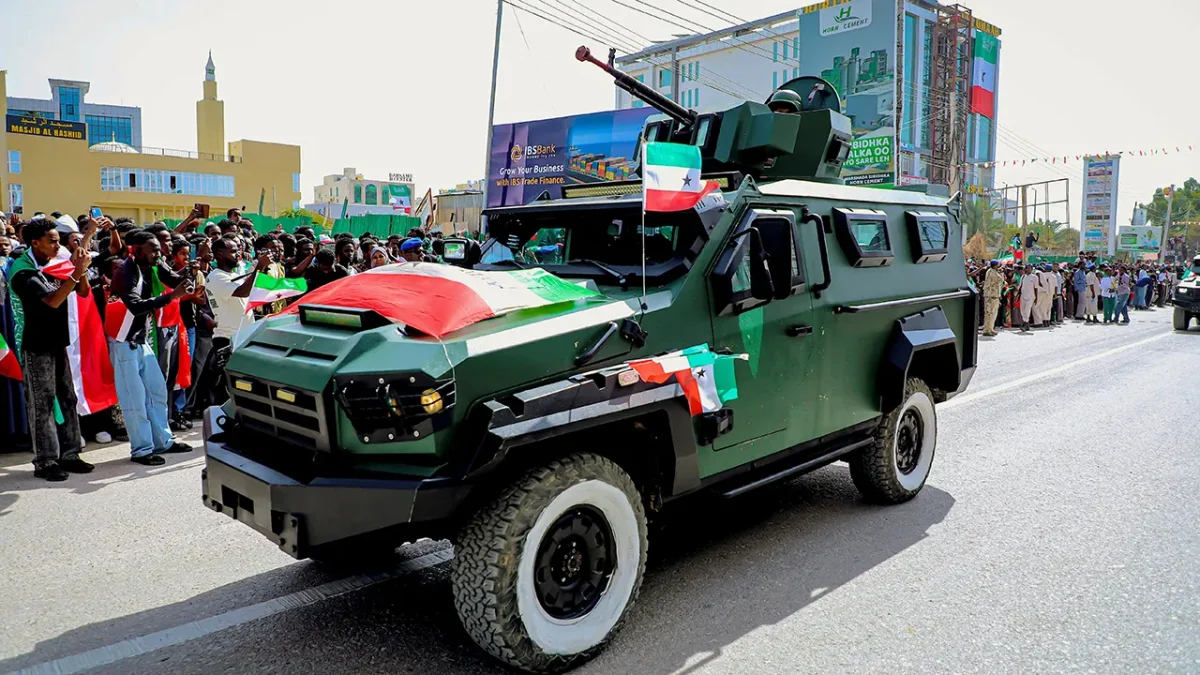
As of May 27, 2026, the United States is reportedly assessing potential military access to port and airbase facilities in Somaliland, an unrecognised state in the Horn of Africa. This move comes as Senator Ted Cruz actively advocates for U.S. recognition of Somaliland's sovereignty. The initiative is understood to be a strategic response to escalating threats in the Red Sea, particularly from Houthi actions and broader Iranian influence, aiming to bolster regional security and safeguard vital shipping lanes through a new pro-U.S. partnership.
Key Facts
-
Proposed US Action Exploring military access to Somaliland port and airbase facilities.
-
US Congressional Advocacy Senator Ted Cruz championing U.S. recognition of Somaliland.
-
Somaliland's Status Self-declared independent state, internationally unrecognized.
-
Strategic Rationale Countering Red Sea threats from Houthi and Iranian proxies.
-
Geographic Focus Red Sea corridor, Horn of Africa.
Impact
This reported exploration by the U.S. could significantly alter geopolitical dynamics in the Horn of Africa. For Somaliland, formal recognition and military partnership with a global power like the U.S. would be a major step towards international legitimacy and could unlock significant economic and security benefits, fundamentally changing its long-standing de facto status. The broader regional impact could include a rebalancing of power in the Red Sea, potentially offering a more stable counter-presence to the ongoing security challenges posed by Houthi aggression and Iranian expansion. This could lead to a safer environment for international shipping and trade, benefiting global supply chains. However, it also risks exacerbating existing tensions with Somalia, which views Somaliland as part of its sovereign territory. For U.S. foreign policy, engaging with Somaliland presents an opportunity to diversify alliances and operational bases in a critical maritime region, reducing reliance on existing facilities and enhancing strategic flexibility. It signals a willingness to engage with non-traditional partners to address pressing security concerns, potentially setting a precedent for future U.S. engagement with other breakaway states.
Key Insights
-
1
Red Sea Imperative
The sustained threat to Red Sea shipping lanes has become a primary driver for U.S. re-evaluation of its strategic footprint in the region, prioritizing maritime security and trade flow over traditional diplomatic sensitivities.
-
2
Leveraging Non-Traditional Allies
Washington appears increasingly willing to engage with de facto states like Somaliland, utilizing their strategic location and pro-Western stance to counter adversarial influence, even in the absence of full international recognition.
-
3
Congressional vs. Executive Influence
Senator Cruz's high-profile advocacy highlights the ongoing tension or synergy between legislative calls for specific foreign policy shifts and the executive branch's often more cautious diplomatic approach.
Opportunities
The potential U.S. military presence in Somaliland presents significant development and economic opportunities for the region. Upgrading port and airbase facilities would necessitate substantial infrastructure investment, creating jobs and stimulating local economies. Beyond direct defense spending, this could spur growth in ancillary services, logistics, and potentially attract further foreign direct investment into other sectors of Somaliland's economy, as improved security and international visibility enhance its appeal to investors. Furthermore, a strengthened security partnership with the U.S. could lead to enhanced training and equipping of Somaliland's forces, contributing to regional stability. This stability, coupled with strategic access to vital trade routes, could unlock new business ventures in maritime logistics, trade facilitation, and resource development across the Horn of Africa, benefiting companies in defense, construction, and technology sectors looking to establish a foothold in a strategically crucial area.
Risks & Challenges
A primary risk is the potential for increased regional instability, particularly concerning Somalia. Mogadishu vehemently opposes Somaliland's independence and any international recognition or military engagement would be viewed as a direct affront to its sovereignty, potentially escalating diplomatic disputes or even leading to renewed conflict between Somaliland and Somalia. This could divert resources, exacerbate humanitarian challenges, and undermine broader counter-terrorism efforts in the already fragile Horn of Africa. Another significant risk lies in diplomatic fallout with other nations, particularly those adhering strictly to the principle of territorial integrity and non-intervention in internal affairs. A U.S. recognition or significant military partnership with Somaliland could strain relations with allies that do not support its independence, complicating multilateral efforts in the region and potentially leading to a fragmented international response to regional crises. Moreover, the long-term commitment and potential entanglement in a complex local conflict without clear international consensus could prove costly for the United States, both financially and geopolitically.
Source url: https://www.foxnews.com/world/iran-houthi-terror-proxy-facing-red-sea-threat-from-pro-us-african-nation
Related Articles