xAI's Grok Chatbot Evaluated in Tesla FSD (Supervised) on NYC Streets
NewsHub
Apr 25, 2026
1 min read
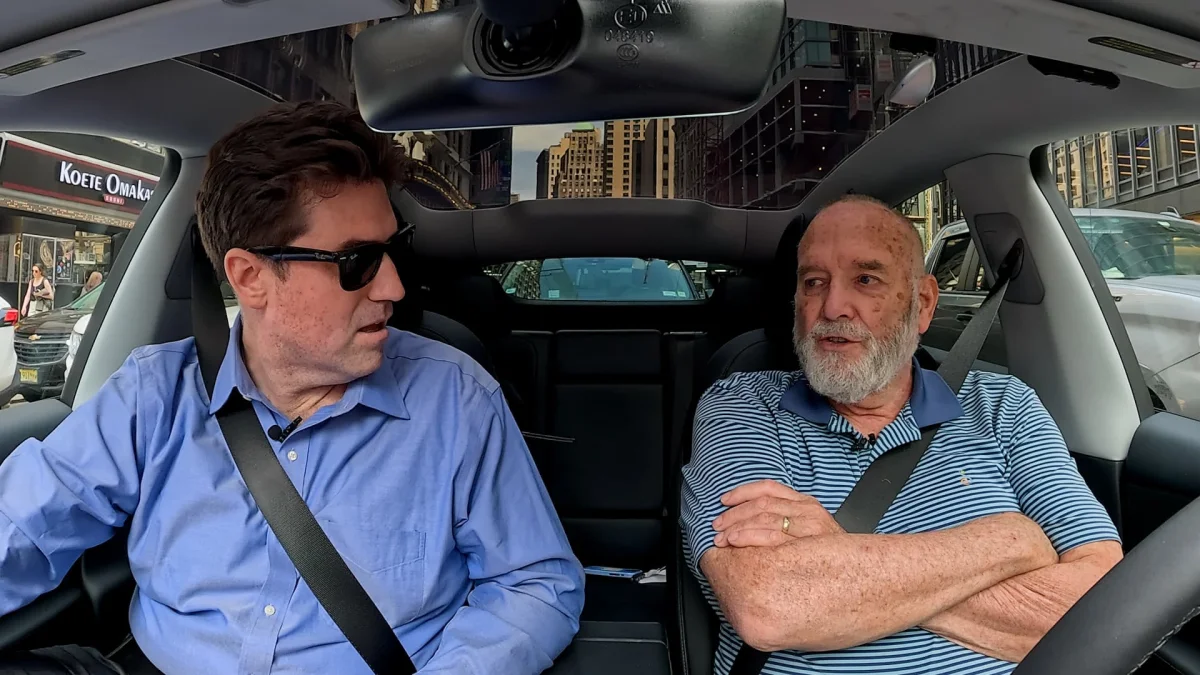
A recent observation by CNBC detailed the real-world application of xAI's Grok chatbot within a Tesla Model Y operating under Full Self-Driving (Supervised) in New York City. The report focused on a Tesla owner's practical use of Grok, examining how the advanced conversational AI integrates into the vehicle's driving environment. This trial offers insights into the evolving landscape of in-car artificial intelligence and its potential to augment the user experience within autonomous and semi-autonomous driving platforms, highlighting both convenience and integration challenges.
Key Facts
-
AI System Tested xAI Grok chatbot
-
Vehicle Platform Tesla Model Y
-
Driving Mode Full Self-Driving (Supervised)
-
Test Location New York City
-
Observing Entity CNBC
-
Participant Tesla Model Y owner
Impact
The integration of advanced conversational AI like Grok into vehicle systems marks a significant shift in the automotive user experience. This development promises enhanced in-car productivity, entertainment, and information access, allowing drivers and passengers to interact with the vehicle in more natural and sophisticated ways. Such capabilities could transform commutes into more efficient or enjoyable experiences, providing hands-free control and information retrieval without diverting attention from the road (when supervised driving is active and appropriate). Beyond individual user benefits, this trend has broader implications for the automotive industry. It intensifies competition among car manufacturers and AI developers to offer the most intuitive and capable in-car intelligent assistants. Furthermore, it paves the way for deeper collaboration between technology companies and automakers, potentially leading to new ecosystem partnerships and standardized interfaces for third-party AI services within vehicles.
Key Insights
-
1
Technology Integration
Demonstrates the practical integration of an external, advanced AI model with a vehicle's native operating and assisted-driving systems.
-
2
User Interaction
Provides real-world perspectives on how drivers utilize conversational AI in dynamic urban driving conditions.
-
3
Autonomy Enhancement
Highlights the potential for AI chatbots to complement and enhance the capabilities of supervised autonomous driving features, moving beyond basic voice commands.
-
4
Market Evolution
Signifies the ongoing convergence of AI development with automotive innovation, pushing boundaries for in-car digital assistants.
Opportunities
From a business perspective, the successful integration of Grok into Tesla vehicles opens avenues for specialized in-car AI applications. This could lead to new subscription models for premium AI features, partnerships between AI developers and automotive OEMs for exclusive content or services, and the creation of an app store-like ecosystem for AI-powered automotive tools. Companies could develop tailored AI assistants for different segments, such as long-haul drivers, ride-share operators, or family vehicles. Technologically, this scenario encourages innovation in multimodal AI interfaces that seamlessly blend voice, touch, and contextual data. Opportunities exist in developing robust and secure integration protocols for third-party AI into safety-critical vehicle systems. Further advancements could include predictive AI that anticipates driver needs, proactive contextual assistance, and even personalized driving experiences based on learned user preferences and driving habits.
Risks & Challenges
A primary concern with integrating sophisticated AI like Grok into a driving environment is the potential for driver distraction. Despite the hands-free nature, complex AI interactions could still demand cognitive attention, diverting focus from the road and potentially compromising safety, especially in 'supervised' autonomous modes where driver vigilance is paramount. Furthermore, the reliability and accuracy of AI responses, particularly in real-time information retrieval or navigational assistance, present a significant risk if erroneous data leads to poor driving decisions or user frustration. Beyond immediate safety, there are considerable risks related to data privacy and security. Integrating third-party AI into a vehicle system creates new vectors for data collection, processing, and potential breaches. Who owns the data generated during Grok's usage within a Tesla? How is it secured? Additionally, the potential for AI to be misused, hacked, or to propagate misinformation within the confines of a vehicle could have severe consequences, impacting both user trust and brand reputation.
Source url: https://www.cnbc.com/2026/04/25/tesla-and-xais-grok-shows-promises-and-risks-of-ai-chatbots-in-cars.html
Related Articles