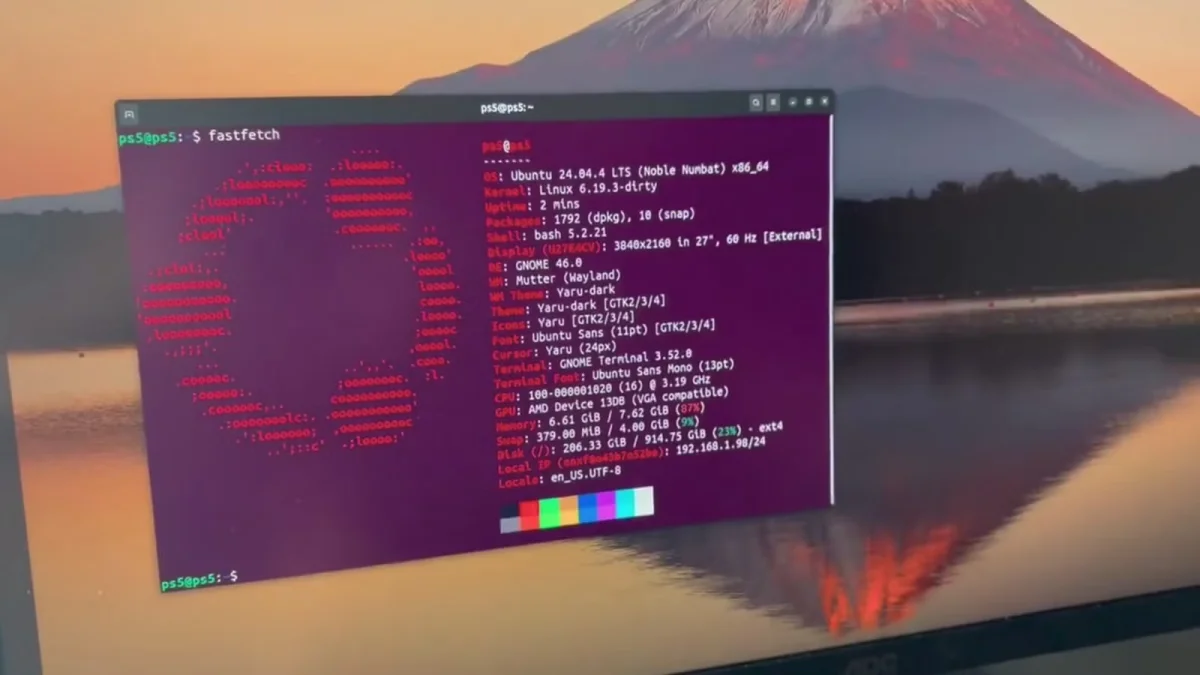
Unigen Launches M.2 AI Accelerator Empowering Edge Devices with 20 Billion Parameter LLM Capabilities
NewsHub
Apr 15, 2026
1 min read
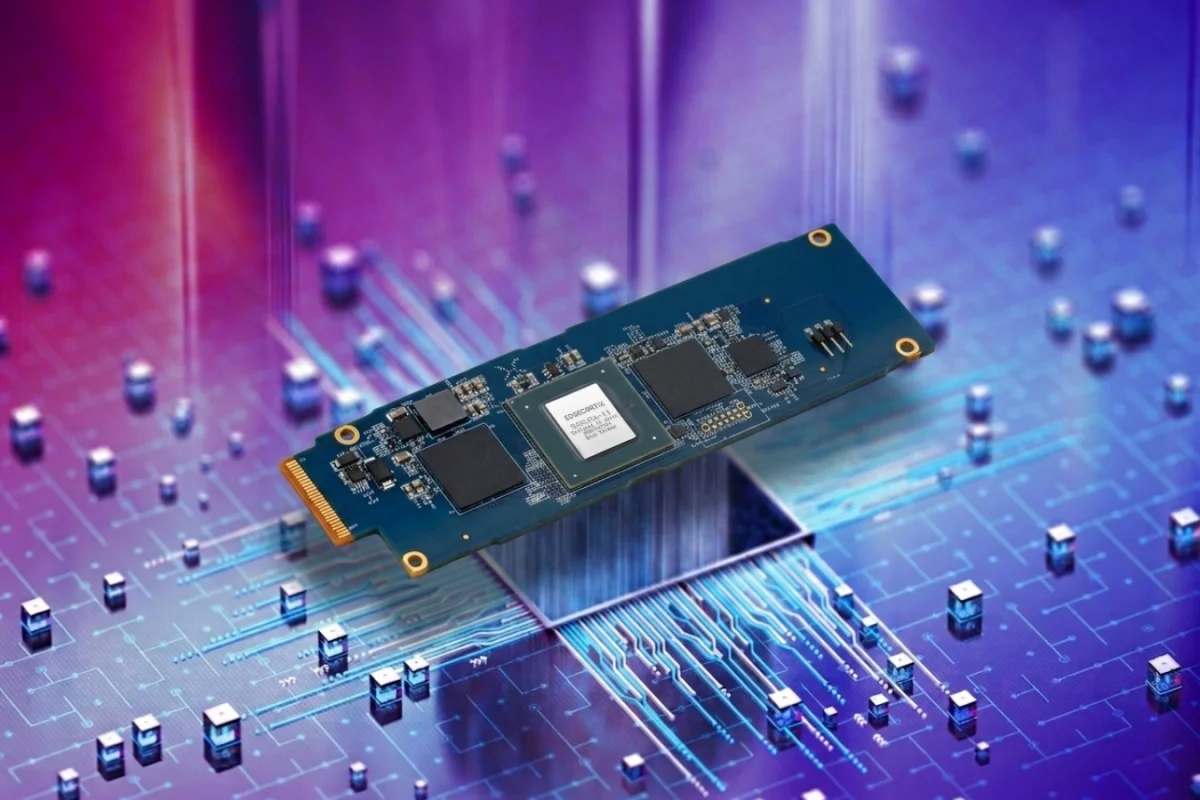
Unigen has introduced an innovative AI module designed to fit into standard M.2 slots, significantly enhancing the local AI processing power of consumer and professional systems. This compact accelerator integrates 32 GB of dedicated memory and delivers up to 60 Trillion Operations Per Second (TOPS), making it capable of running large language models (LLMs) with up to 20 billion parameters directly on a device. This development marks a substantial step towards democratizing access to high-performance AI capabilities, reducing reliance on cloud infrastructure for complex AI tasks and opening new avenues for on-device intelligent applications.
Key Facts
-
Manufacturer Unigen
-
Form Factor Standard M.2 slot
-
AI Processing Power Up to 60 TOPS
-
Dedicated Memory 32 GB
-
LLM Capacity Supports models up to 20 Billion parameters
Impact
This M.2 AI module is set to significantly impact both the consumer and enterprise computing landscapes. For consumers and prosumers, it provides an unprecedented ability to run powerful generative AI models locally, enhancing privacy, reducing operational costs associated with cloud AI services, and enabling robust offline AI functionalities for applications like content creation, coding assistance, and advanced data analysis directly on their personal machines. This shifts the paradigm from AI as a purely cloud-centric service to a more distributed, personalized utility. From a business perspective, the module facilitates the wider adoption of edge AI deployments. Industries requiring stringent data security, such as healthcare, finance, or government, can now process sensitive information with AI locally, mitigating data transfer risks. Furthermore, it lowers the barrier to entry for smaller enterprises or specialized hardware integrators looking to embed sophisticated AI capabilities into their products without heavy investment in dedicated GPU infrastructure or continuous cloud subscriptions. This could foster innovation in embedded systems, smart factories, and retail analytics.
Key Insights
-
1
Market Trend
The introduction of dedicated M.2 AI accelerators by Unigen underscores the accelerating industry trend towards on-device and edge AI processing. This movement is driven by demands for lower latency, enhanced data privacy, reduced operational costs, and the ability to operate AI in environments with limited internet connectivity.
-
2
Accessibility & Democratization
By packaging significant AI compute power into a standard M.2 form factor, Unigen is effectively democratizing access to high-performance LLM capabilities. This allows a broader range of users and developers to experiment with and deploy advanced AI models without requiring specialized, high-end workstations or constant cloud access, fostering innovation outside traditional data centers.
-
3
Competitive Landscape
This product positions Unigen as a key player in the burgeoning market for specialized AI acceleration hardware, directly competing with integrated AI solutions from chip giants like Intel, AMD, and Qualcomm, as well as lower-tier dedicated AI hardware. Its focus on the M.2 slot leverages existing hardware infrastructure, potentially giving it a quick route to market.
-
4
Use Case Expansion
The capacity to run 20B parameter LLMs locally opens up a vast array of new use cases for privacy-centric AI applications, real-time analytics at the edge, and embedded systems that require complex reasoning without cloud dependency. This includes sophisticated offline assistants, intelligent industrial automation, and advanced security systems.
Opportunities
The availability of M.2 AI accelerators like Unigen's presents numerous business and technological opportunities. Software developers can now focus on creating a new generation of local-first AI applications, optimizing LLMs and other AI models to leverage such on-device hardware, potentially leading to a rich ecosystem of specialized tools for various industries. This includes new creative suites, privacy-focused productivity tools, and advanced analytical software that benefits from instant, local processing. Hardware manufacturers, particularly in the PC and embedded systems space, have an opportunity to integrate these modules, offering 'AI-ready' systems as a premium feature. This could drive innovation in motherboard design to better accommodate AI modules and their thermal requirements. Furthermore, system integrators can offer tailored solutions for enterprises seeking to deploy distributed AI networks, providing consultancy and deployment services for leveraging edge AI for enhanced data security and operational efficiency.
Risks & Challenges
While promising, the widespread adoption of M.2 AI modules faces several risks and challenges. One significant hurdle is the potential for performance limitations compared to full-sized dedicated GPUs, especially for training larger models or running extremely complex inferences at high batch sizes. The M.2 form factor's inherent constraints regarding power delivery and thermal dissipation mean that sustained high-performance operations could be challenging, potentially leading to throttling or requiring robust cooling solutions in a compact space. Another risk lies in the software ecosystem's readiness. A proliferation of diverse AI hardware accelerators could lead to fragmentation in software development, requiring developers to optimize for multiple platforms. Achieving seamless integration, robust driver support, and efficient frameworks that abstract hardware complexities will be crucial for widespread adoption. Furthermore, the rapid pace of AI hardware development means products could face accelerated obsolescence, as newer, more powerful, or energy-efficient alternatives emerge, potentially impacting long-term investment decisions for both consumers and businesses.
Source url: https://wccftech.com/turn-your-vacant-m-2-slot-into-a-20b-llm-cruncher-with-dedicated-ai-module/