
Samsung's 2nm Chip Tech Falls Short for Qualcomm, Hindering Diversification from TSMC
NewsHub
Apr 10, 2026
1 min read
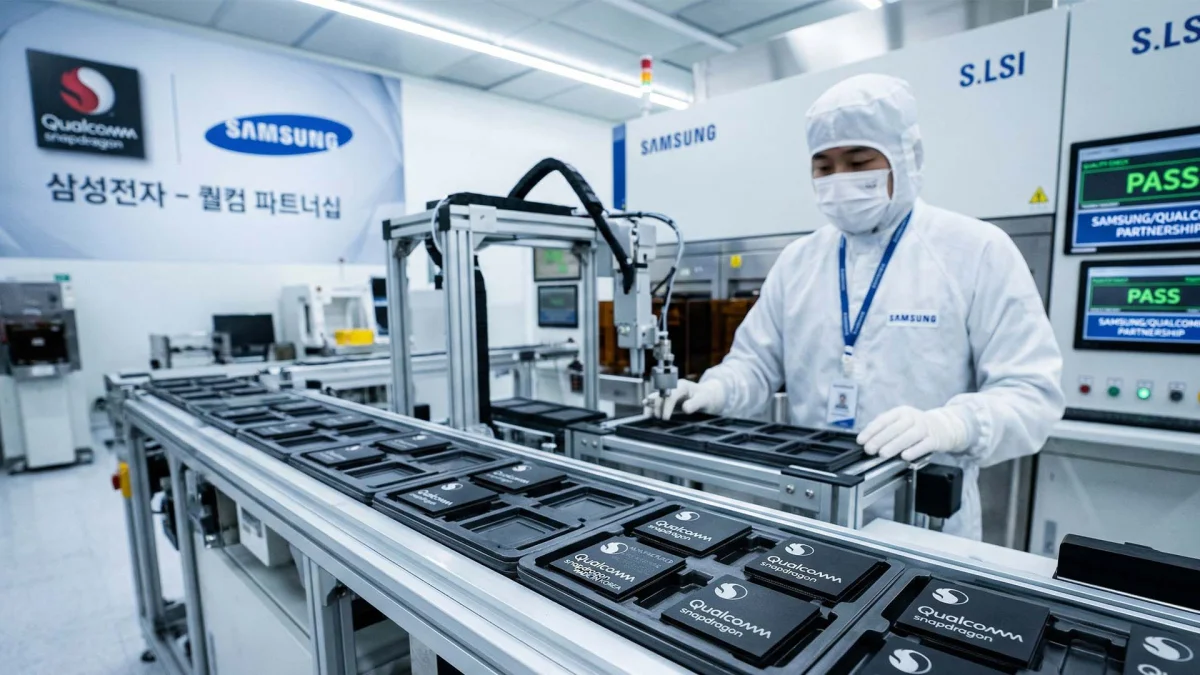
Qualcomm's efforts to broaden its semiconductor manufacturing base beyond TSMC are facing a significant hurdle. Reports indicate that Samsung's advanced 2-nanometer fabrication process has not yet met Qualcomm's performance benchmarks. This gap is preventing the chip giant from reducing its reliance on its primary foundry partner, TSMC, and is crucial for securing future chip orders with Samsung's next-generation technology.
Key Facts
-
Qualcomm's Goal Reduce dependency on TSMC
-
Samsung's Technology 2nm Gate-All-Around (GAA) process
-
Current Status Failing to meet Qualcomm's performance benchmarks
-
Consequence Difficulty in establishing a strong foundry partnership with Samsung
Impact
This situation directly impacts Qualcomm's supply chain strategy, limiting its options for sourcing its most advanced chips. A sustained reliance on TSMC for next-generation silicon could leave Qualcomm vulnerable to supply disruptions or price fluctuations. For Samsung Foundry, failing to secure a major client like Qualcomm for its 2nm node represents a missed opportunity to solidify its position in the high-end semiconductor manufacturing market and compete more effectively with its rivals.
Key Insights
-
1
Technological Readiness
Samsung's 2nm GAA technology may require further refinement to achieve the necessary performance and yield levels demanded by leading chip designers.
-
2
Market Competition
The intense competition in advanced semiconductor manufacturing means that meeting stringent customer requirements is paramount for market share gains.
-
3
Strategic Imperative
Qualcomm's diversification strategy is a common approach to mitigate supply chain risks and leverage competitive foundry pricing.
Opportunities
Should Samsung successfully bridge the performance gap with its 2nm process, it could unlock significant new business. This would not only secure Qualcomm's orders but potentially attract other major players seeking alternatives to TSMC. For Samsung, achieving this milestone would validate its considerable investment in next-generation manufacturing and enhance its reputation as a leading foundry. Furthermore, this could spur further innovation in foundry technologies across the industry as companies race to meet increasingly demanding customer specifications.
Risks & Challenges
The primary risk for Qualcomm is its continued over-reliance on TSMC. Any geopolitical instability, natural disaster, or unexpected production issue at TSMC's facilities could severely disrupt Qualcomm's ability to produce its chips, impacting product availability and market share. This dependency also limits Qualcomm's bargaining power in negotiations with TSMC. For Samsung, the risk lies in losing out on a major contract that could have propelled its foundry business forward. If its 2nm process remains uncompetitive, it may struggle to attract other high-volume clients, prolonging its efforts to gain significant traction against established leaders.
Source url: https://wccftech.com/samsung-2nm-process-not-satisfied-qualcomm-quality-benchmark/
Related Articles