Whale Communication: Sperm Whales Mimic Human Vowels, Study Reveals
NewsHub
Apr 14, 2026
1 min read
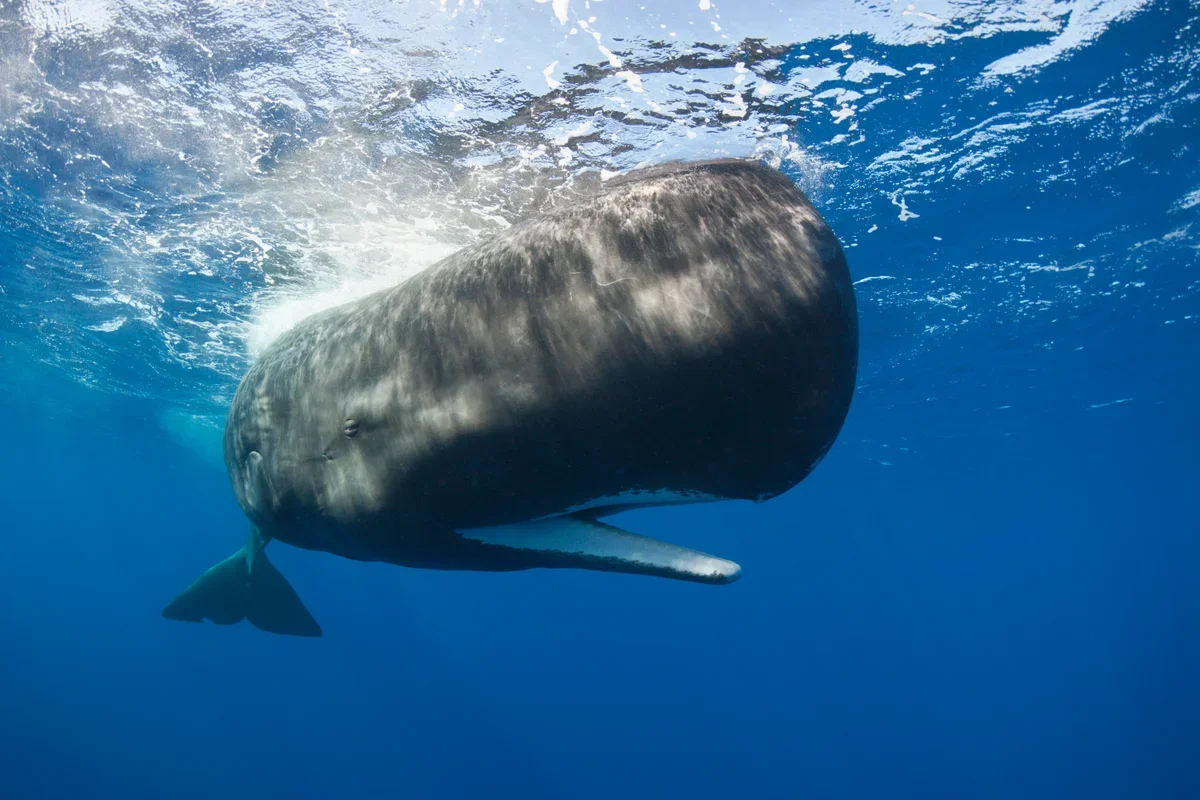
Groundbreaking research suggests that sperm whales, known for their distinctive clicking vocalizations, may possess a more sophisticated communication system than previously understood. Scientists have identified variations in their clicks that bear a striking resemblance to human vowel sounds. This discovery hints at a potentially richer linguistic capacity in these marine mammals, challenging our current understanding of animal communication and opening new avenues for research into cetacean intelligence.
Key Facts
-
Communication Method Clicks
-
Vocalization Similarity Human vowels
-
Potential for Complex Language Indicated by vowel-like sounds
Impact
This finding could profoundly alter our perception of non-human intelligence and communication. If sperm whales are indeed employing vowel-like distinctions to convey meaning, it suggests a level of linguistic complexity previously only attributed to humans. The implications extend to conservation efforts, as understanding their communication could provide crucial insights into their social structures, migration patterns, and responses to environmental changes. Furthermore, it may necessitate a re-evaluation of the definition of language itself and the cognitive abilities of other species.
Key Insights
-
1
Cognitive Evolution
Explores parallels in the development of complex vocalizations across species.
-
2
Bioacoustics Advancement
Drives innovation in the analysis of animal sounds and potential for deciphering meaning.
-
3
Anthropomorphism Caution
Highlights the need for objective scientific inquiry while acknowledging complex animal behavior.
Opportunities
The revelation of vowel-like sounds in sperm whale communication presents significant opportunities for technological advancement in bioacoustics and artificial intelligence. Developing sophisticated algorithms capable of deciphering these nuanced vocalizations could lead to breakthroughs in understanding marine mammal societies and their ecological roles. This could spur investment in specialized hydrophone arrays and machine learning platforms designed for complex animal sound analysis, potentially leading to new fields of study and even commercial applications in marine biology and conservation technology.
Risks & Challenges
A significant risk associated with this discovery is the potential for misinterpretation and anthropomorphism. Overstating the similarity to human language could lead to flawed scientific conclusions and hinder genuine understanding. There's also a risk that increased human attention and technological intrusion, driven by fascination with this newfound complexity, could inadvertently disrupt sperm whale communication and behavior, negatively impacting their already vulnerable populations. The pressure to 'decode' their language could also lead to unsustainable research practices.
Related Articles