Mars Rover Curiosity Explores Martian Craters and Polygonal Terrain
NewsHub
Apr 15, 2026
1 min read
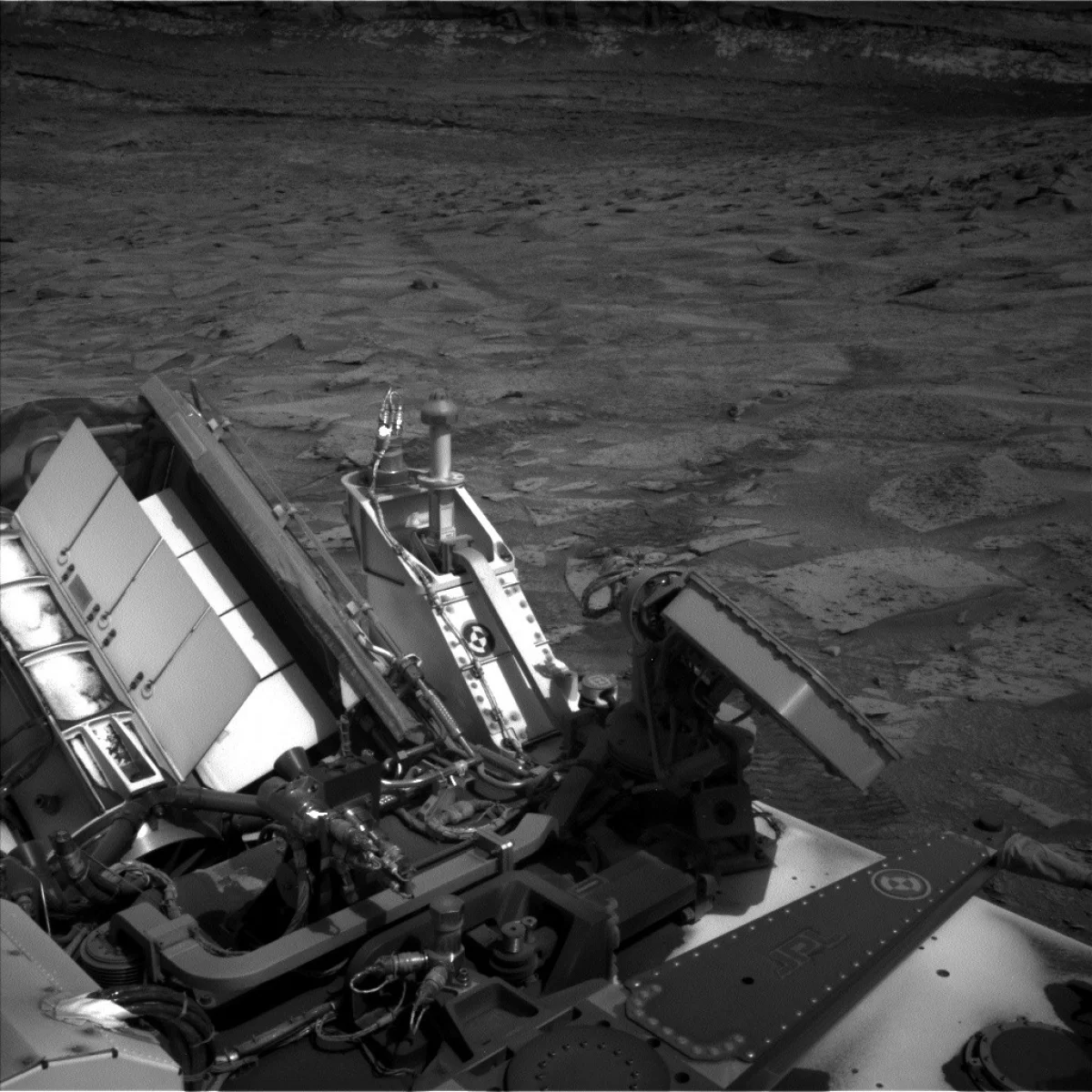
NASA's Curiosity rover has recently completed a series of Martian days, or 'sols,' focusing its scientific gaze on a small impact crater and extensive areas of polygonal ground. Analysis from the Jet Propulsion Laboratory, spearheaded by Deputy Project Scientist Abigail Fraeman, reveals intricate details about Mars' geological past. The rover's ongoing mission continues to provide invaluable data, helping scientists piece together the complex history of the Red Planet's surface and potential for past habitability.
Key Facts
-
Rover Mission Duration Sols 4859-4866
-
Key Geological Features Observed Small impact crater and polygonal terrain
-
Lead Scientist Abigail Fraeman, Deputy Project Scientist, NASA JPL
Impact
The ongoing exploration by Curiosity directly contributes to humanity's understanding of planetary evolution. By meticulously documenting geological features like craters and polygonal patterns, scientists can infer past environmental conditions, such as the presence and behavior of water on Mars. This knowledge is crucial for assessing the planet's potential to have once harbored life and for informing future human exploration efforts. Each sol's worth of data adds a vital piece to the puzzle of Mars' transformation from a potentially wetter world to the arid planet we observe today.
Key Insights
-
1
Geological Processes
The polygonal terrain suggests specific weathering and erosion processes likely driven by cycles of freezing and thawing or desiccation, indicating past hydrological activity.
-
2
Crater Significance
Even small craters can offer unique insights into impact history and provide access to subsurface materials, revealing layers of Martian history that might otherwise remain hidden.
-
3
Data Interpretation
The detailed analysis of these features underscores the advanced capabilities of the Curiosity rover and the sophisticated scientific investigations it undertakes.
Opportunities
The detailed geological mapping and composition data collected by Curiosity can identify areas of scientific interest for future missions, including potential landing sites for sample return or human expeditions. Furthermore, the understanding of Martian surface processes could inform the design of more robust and adaptable robotic and human systems for operating in extreme extraterrestrial environments. This ongoing research also fosters innovation in remote sensing and data analysis techniques, with potential applications beyond planetary science.
Risks & Challenges
While the Curiosity mission has been remarkably successful, operational challenges are inherent in exploring a distant planet. The harsh Martian environment, including dust accumulation on solar panels (though Curiosity uses a radioisotope thermoelectric generator), extreme temperature fluctuations, and the risk of mechanical failure, perpetually pose threats to the rover's functionality. Moreover, the vast distance from Earth introduces communication delays and limits the real-time intervention capabilities of mission control, requiring sophisticated autonomous operations.
Source url: https://science.nasa.gov/blog/curiosity-blog-sols-4859-4866-one-small-crater-and-thousands-of-polygons/
Related Articles