
New York's Solar Farm Expansion Sparks Controversy in Rural Areas
NewsHub
May 25, 2026
1 min read
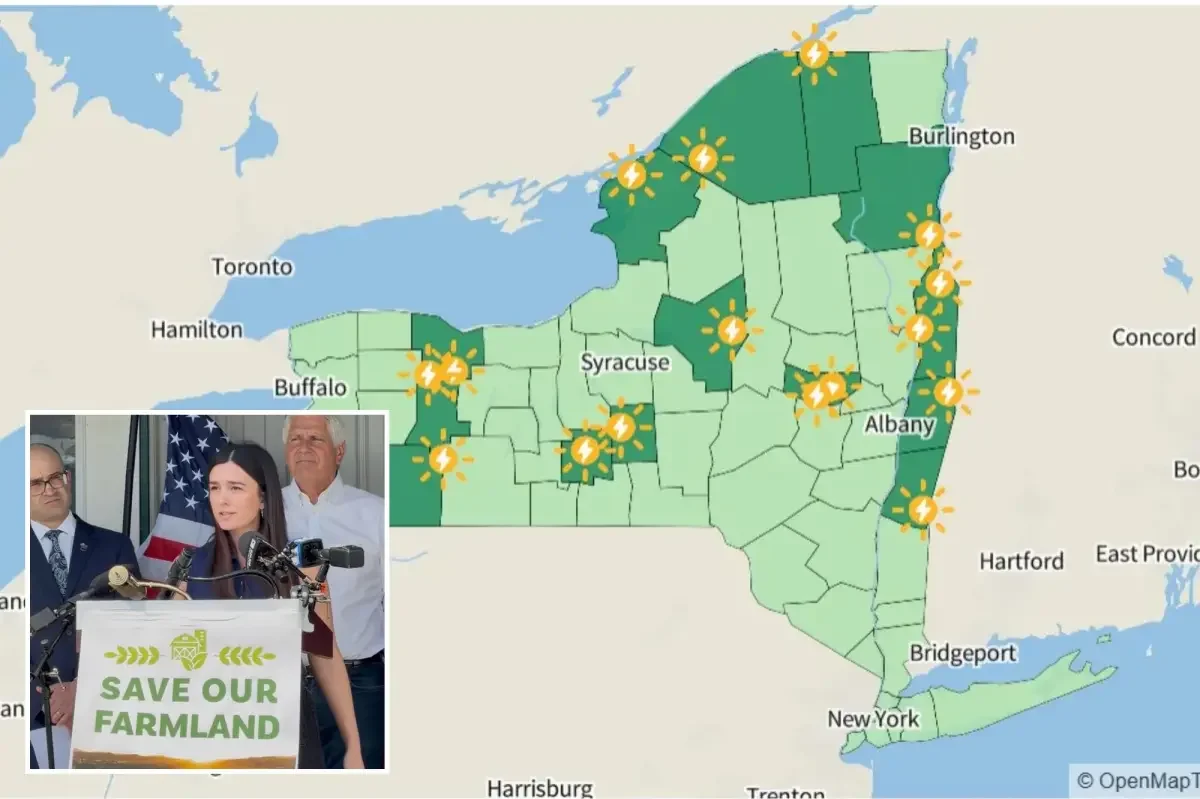
New York's plan to build 18 large-scale solar farms in rural areas is facing opposition from local residents, who claim the projects will harm the environment and wildlife, and produce limited energy. The state's push for renewable energy has led to concerns about the impact on rural landscapes and ecosystems.
Key Facts
-
Number of Solar Farms 18
-
Location Rural communities across New York state
-
Type of Solar Farms Industrial-scale
-
Local Opposition Strong
Impact
The construction of these solar farms is expected to have significant environmental and social impacts. Local residents are concerned about the destruction of natural habitats and the potential harm to wildlife. Additionally, the solar farms may alter the rural landscape, affecting the aesthetic value of the area. The limited energy production from these farms has also raised questions about their effectiveness in reducing the state's carbon footprint.The opposition from local residents has sparked a debate about the balance between renewable energy goals and environmental conservation. The state's renewable energy targets have led to a rush to develop large-scale solar farms, often in rural areas with limited infrastructure and sensitive ecosystems. This has created tensions between the state's energy goals and the concerns of local communities.The impacts of these solar farms will also be felt by local farmers, who may see their land values decrease or their agricultural activities disrupted. The construction of solar farms may also lead to the displacement of rural residents, as the influx of industrial-scale energy production alters the character of the area.
Key Insights
-
1
Environmental Impact
The construction of large-scale solar farms in rural areas can have significant environmental impacts, including habitat destruction and wildlife disruption.
-
2
Renewable Energy Policy
The state's renewable energy targets have created a rush to develop large-scale solar farms, often with limited consideration for local concerns and environmental impacts.
-
3
Community Engagement
Effective community engagement and consultation are crucial in mitigating the social and environmental impacts of large-scale energy projects.
Opportunities
The controversy surrounding New York's solar farm expansion highlights opportunities for innovation in renewable energy development. Companies could focus on developing more sustainable and community-friendly solar farm designs, such as agrivoltaics or floating solar panels. Additionally, investments in energy storage and grid infrastructure could enhance the efficiency and effectiveness of renewable energy production.The growth of the renewable energy sector also presents opportunities for local economic development, including job creation and infrastructure investments. However, these opportunities must be balanced with the need to protect rural landscapes and ecosystems, and to engage with local communities in a meaningful and transparent way.
Risks & Challenges
The construction of large-scale solar farms in rural areas poses significant risks to the environment and local communities. The destruction of natural habitats and the disruption of wildlife ecosystems can have long-term and irreversible consequences. Additionally, the limited energy production from these farms may not justify the environmental and social costs associated with their construction.The controversy surrounding New York's solar farm expansion also highlights the risks associated with top-down energy policy decisions. The state's renewable energy targets have created a rush to develop large-scale solar farms, often with limited consideration for local concerns and environmental impacts. This approach may lead to social and environmental conflicts, and undermine the long-term viability of renewable energy projects.
Related Articles