
Komati River Incident: Crocodile Euthanized, Airlifted Amid Missing Businessman Probe in South Africa
NewsHub
May 06, 2026
1 min read
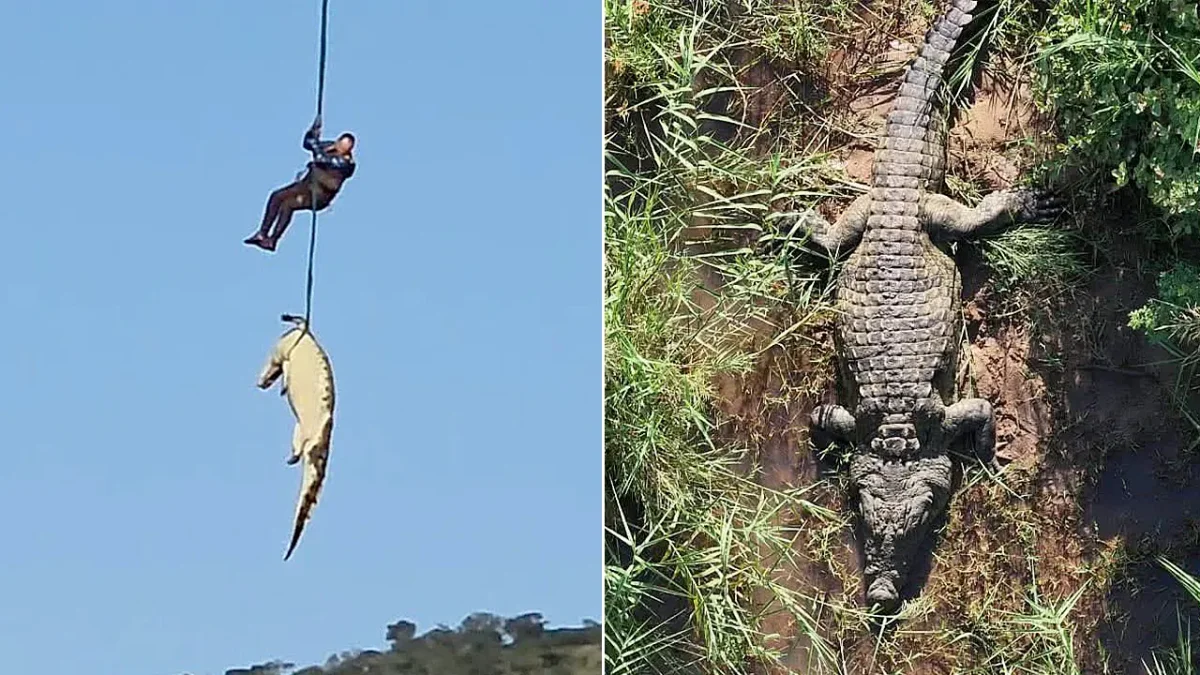
South African authorities recently undertook a significant operation on the Komati River, involving the removal of a substantial crocodile suspected in the disappearance of a local businessman. The large reptile was humanely euthanized before being airlifted by helicopter from the river as part of an ongoing investigation. This incident, reported on May 6, 2026, highlights the complex challenges of human-wildlife coexistence in regions where communities and dangerous predators share environments. The drastic measures taken underscore the seriousness with which authorities are addressing public safety concerns and the search for the missing individual.
Key Facts
-
Location Komati River, South Africa
-
Report Date May 6, 2026
-
Subject Massive Crocodile
-
Suspected Role Implicated in the disappearance of a local businessman
-
Outcome for Crocodile Euthanized and airlifted
-
Removal Method Helicopter
-
Victim Status Missing
Impact
The immediate impact of this event will likely be felt within the local communities along the Komati River, potentially leading to increased public anxiety regarding personal safety, especially for those who rely on or live near the river. This incident could disrupt local economic activities, such as tourism and fishing, as visitors and residents may become more wary of water-based recreation. Furthermore, the fate of the missing businessman will undoubtedly be a central point of concern, with the community seeking closure and answers from the ongoing investigation. More broadly, the incident reignites discussions on human-wildlife conflict in South Africa. It brings into sharp focus the balancing act between conservation efforts for apex predators like crocodiles and the imperative to protect human life. This event might influence policy reviews concerning wildlife management strategies, public safety protocols around major waterways, and the provision of resources for managing such dangerous encounters.
Key Insights
-
1
Human-Wildlife Conflict
This case serves as a stark reminder of the escalating challenges posed by human encroachment into natural habitats, leading to more frequent and dangerous interactions with wildlife.
-
2
Wildlife Management Strategy
The decision to euthanize and airlift the crocodile demonstrates a decisive, albeit controversial, intervention by authorities prioritizing human safety in the face of a direct threat.
-
3
Public Safety & Awareness
The incident underscores the critical need for heightened public awareness and stringent safety measures for communities living in close proximity to rivers known to harbor dangerous wildlife.
Opportunities
From a technological perspective, this incident could spur innovation in remote wildlife monitoring and deterrent systems. Development of advanced drone-based surveillance, AI-powered animal detection, or non-lethal deterrent technologies for large predators could find new market opportunities. Furthermore, advancements in specialized equipment for safe capture, relocation, or forensic analysis of large wildlife in challenging environments could be explored. On the business front, there are opportunities for specialized eco-tourism operators to develop and market safer, guided experiences, emphasizing responsible wildlife viewing and educational programs on coexistence. There's also potential for community engagement initiatives, perhaps supported by NGOs or government, focusing on sustainable resource use and implementing local safety protocols to mitigate future risks, potentially leveraging local knowledge for effective solutions.
Risks & Challenges
One significant risk lies in the potential for public overreaction or misdirected retaliation against crocodile populations, driven by fear rather than scientific management. The act of euthanizing a large predator, while deemed necessary for public safety in this instance, could draw criticism from animal welfare organizations and conservationists, raising ethical questions about wildlife management practices. There's also the inherent risk of misidentification, where a non-implicated animal might be targeted if scientific confirmation is not robust, further damaging conservation efforts and public trust. Economically, the incident could deter tourism to the Komati River region if it fosters a perception of high danger, impacting local businesses reliant on visitors. Socially, it may exacerbate tensions between local communities and wildlife authorities or conservation groups if approaches to managing dangerous animals are not perceived as balanced or transparent. Logistically, such complex operations involving helicopters and specialized teams are costly, posing a financial burden on regional authorities.
Source url: https://www.foxnews.com/world/south-african-police-airlift-massive-crocodile-suspected-eating-missing-local